
So, you're struggling with that frustrating slice, huh? It’s like the ball just wants to curve away from the target, no matter what you do. Many golfers deal with this, and it often comes down to how you're holding the club. Before you start thinking about a whole new swing, let's look at your grip. It might be the simplest fix for how to stop slicing the golf ball.
Key Takeaways
- A weak grip, where your hands are turned too far left (for right-handers), often leads to an open clubface at impact, causing slices.
- To strengthen your grip, position your lead hand so the 'dimple' on your wrist points more to the right, and turn your trail hand to the right as much as possible.
- Ensure your grip pressure isn't too tight; a relaxed hold allows for better clubface control through the swing.
- Adjust your body alignment at address, with hips and shoulders aimed more towards the target, to encourage an inside-out swing path.
- Consider offset clubs or adjusting ball position if grip changes alone don't solve the slice, but focus on grip first.
Understanding the Weak Grip and Its Impact
Identifying a Weak Grip
Ever wonder why your golf ball keeps veering off to the right? A lot of times, it comes down to how you're holding the club. A "weak grip" is a common culprit. When you look down at your hands, if you can't see at least one or two knuckles on your lead hand (that's your left hand if you're right-handed), you're likely using a weak grip. For your trail hand, the "V" formed by your thumb and index finger should point somewhere around your trail shoulder. If that "V" points too far left, that's another sign of a weak grip. It's like trying to steer a car with the steering wheel turned the wrong way – things just aren't going to go where you want them to.
How a Weak Grip Leads to Slicing
So, how does this weak grip actually cause that dreaded slice? When your hands are in a weak position, it makes it much harder to get the clubface square at impact. Instead, the clubface tends to stay open as you swing through the ball. An open clubface at impact is the primary reason the ball curves to the right. Think about it: if you're hitting a baseball with the bat face open, the ball is going to go off to the side, not straight. The same principle applies here. This open face forces the ball to slice, often losing you a ton of distance and accuracy. It's a frustrating cycle, and fixing your grip is often the first step to breaking it. You can find some helpful tools to correct your grip, like the SwingMate Pro.
The Role of Hand Position at Address
Many golfers make the mistake of setting their grip while standing at address, with the club resting on the ground. This setup often leads to a weak grip naturally. When your body and the club are in their typical starting positions, your lead hand tends to rotate into that weaker position. The club shaft is usually more vertical, and your weight is balanced. This address posture, combined with a weak grip, sets up an open clubface before you even start your swing. It's not about aiming differently; it's about how your hands are positioned on the club itself. The goal is to have your hands in a position that promotes a square or slightly closed clubface through impact, not one that encourages an open one.
The way you hold the club is more than just a physical connection; it dictates the clubface's orientation through the swing. A weak grip essentially pre-sets the clubface to be open at the moment of truth, leading to that frustrating slice. It's a subtle detail that has a massive impact on your ball flight.
Here's a quick look at what to watch for:
- Lead Hand: Can you see one to two knuckles when looking down?
- Trail Hand "V": Does the "V" formed by your thumb and index finger point around your trail shoulder?
- Clubface: Does it feel like it's naturally wanting to stay open?
If you answered "no" to the first two and "yes" to the third, you're likely dealing with a weak grip that needs attention.
Adjusting Your Grip for a Stronger Hold
Alright, so we've talked about how a weak grip can mess things up, leading to that dreaded slice. Now, let's get down to business and actually fix it by adjusting how you hold the club. This isn't about brute force; it's about positioning your hands correctly so the clubface behaves itself through impact. Getting your hands in the right spot is probably the single biggest change you can make to stop slicing.
Positioning the Lead Hand Correctly
For right-handed golfers, this means your left hand. Instead of having it too far around the club (which makes the clubface want to stay open), we want to rotate it slightly to the right. Think about where the "dimple" on your wrist is – that little crease where your forearm meets your hand. You want that dimple pointing more towards the target, or even slightly to the right of it. This might feel a bit strange at first, almost like you're gripping the club too much in your fingers, but trust me, it helps square up the clubface. It’s a key part of improving your golf game.
Integrating the Trail Hand for Stability
Now, let's bring in your right hand (for right-handed players). The goal here is to create a stable connection that supports the lead hand's position. Instead of placing your right hand too much on top of the grip, which can lead to an open face, try to get it a bit more underneath. Specifically, pay attention to your right index finger. Instead of letting it sit on top of the shaft, try to position it more on the side, or even slightly underneath. This helps you feel like you can "close" the clubface through impact. It’s about creating a unified unit with both hands working together.
The Importance of Grip Pressure
This is a big one, and often overlooked. Many golfers grip the club way too tightly, thinking it gives them more control. But honestly, it usually does the opposite. It restricts your wrists and forearms, making it harder to release the club properly and square the face.
Here’s a simple way to think about it:
- Light Pressure: Imagine holding a tube of toothpaste without squeezing it out. You don't want it to slip, but you're not crushing it.
- Lead Hand: Aim for about a 3 or 4 on a scale of 1 to 10.
- Trail Hand: You can often get away with slightly more pressure here, maybe a 5 or 6, to help control the club.
When you grip too tightly, your body tenses up. This tension travels all the way down your arms and into your wrists, preventing them from doing their job at impact. A relaxed grip allows for better wrist hinge and release, which is vital for a square clubface and a straighter shot.
Focusing on these grip adjustments, along with other aspects like strength exercises, can make a huge difference in your ball striking. It takes practice, but the payoff is definitely worth it.
Optimizing Your Body Position for Impact
Okay, so you've got a better grip dialed in. That's awesome. But guess what? Your body's position when you actually hit the ball matters a whole lot too. It's not just about your hands; it's how your whole setup works together to get that clubface square.
Aligning Your Lower Body Towards the Target
Think about where your hips and legs are when you make contact. For a lot of us slicers, our lower body kind of stalls out or even spins away too early. This leaves the clubface open, and bam – slice city. You want your hips to be rotating through towards the target, but in a controlled way. Imagine your belt buckle is leading the charge. This rotation helps square up the clubface naturally. It's a bit of a balancing act, really.
Achieving the Correct Lead Leg and Weight Distribution
When you swing, your weight needs to shift. For most golfers, especially when trying to stop a slice, you want most of your weight on your lead foot at impact. We're talking maybe 80% or so. Your lead leg should feel pretty stable, almost vertical. This helps you stay connected to the shot and prevents that reverse pivot thing where you lean back, which is a surefire way to open the face. Getting this weight distribution right is key for consistent contact and proper golf swing mechanics.
Adjusting the Club Shaft for Delofting
This is where things get a little more technical, but it's important. At address, the club shaft is usually pretty straight up and down relative to your body. But at impact, you want it to be leaning slightly forward. This is called delofting. It helps you hit the ball with a more penetrating trajectory and, importantly, helps close the clubface. You can achieve this by pushing the club's handle forward a bit. It might feel a little strange at first, but it's a big deal for controlling that clubface. It's all about getting the club in the right position before you even think about swinging.
The goal here isn't to force anything. It's about setting up your body so that the natural motion of the swing can bring the clubface back to square. Think of it as setting the stage for a good impact, rather than trying to muscle the ball straight.
The Impact of Grip on Clubface Control
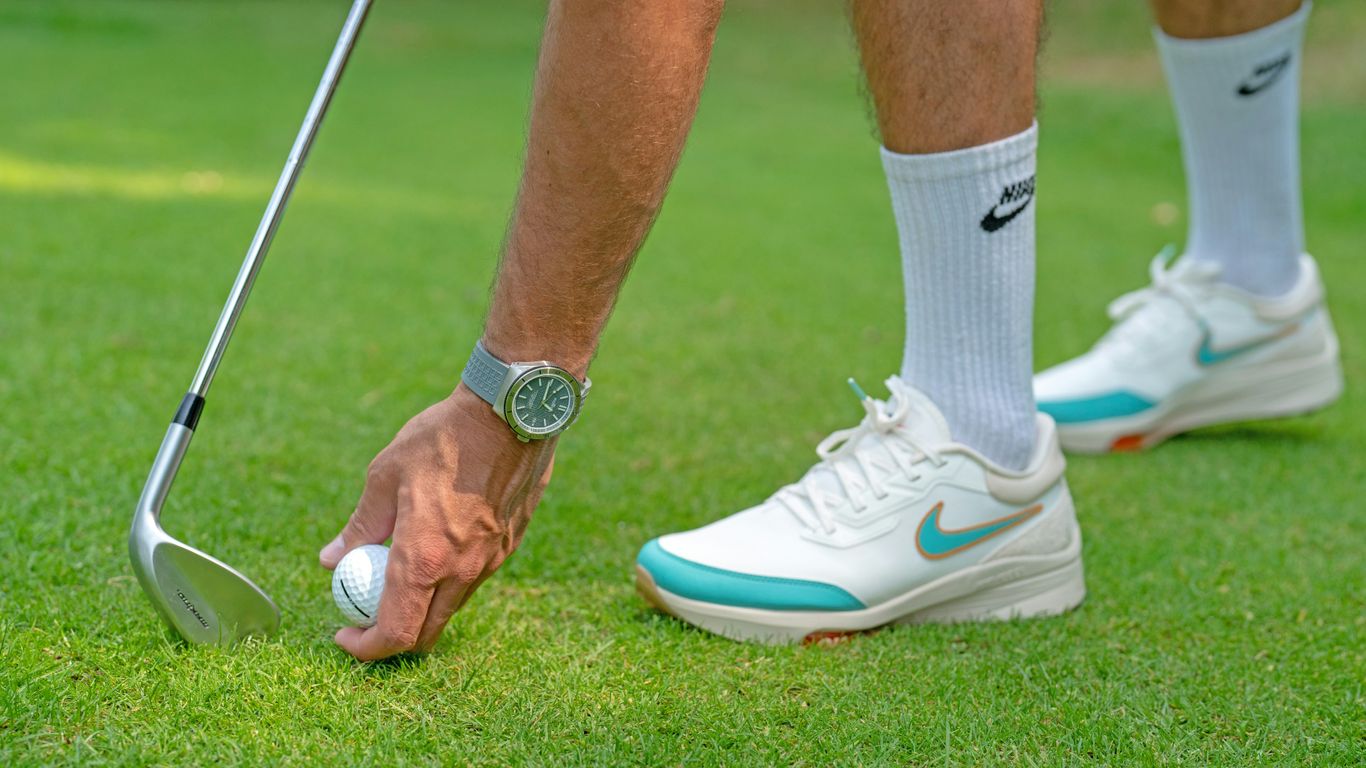
How Grip Affects the Clubface Angle
Your grip is like the steering wheel for your golf club. If you're holding it wrong, you're going to steer the clubface all over the place, and not in a good way. A common issue for slicers is a
Refining Your Grip for Consistent Draws
So, you're tired of that frustrating slice? Let's talk about how tweaking your grip can actually help you hit the ball with a draw, making your shots fly straighter and longer. It's not magic, it's just understanding how your hands interact with the club.
Turning Hands to the Right for an Inside-Out Swing
This is where we start to reverse engineer that slice. Instead of a weak grip that tends to open the clubface, we want a slightly stronger one. For right-handed golfers, this means turning both hands a bit more to the right on the club. Think about it like this: if you were to look down at your hands at address, you'd see more knuckles on your left hand, and the "V" formed by your thumb and index finger on both hands would point more towards your right shoulder. This setup naturally encourages an inside-out swing path, which is key for hitting draws.
Using the Dimple on Your Wrist as a Guide
Here's a simple checkpoint. Find that little dimple or crease where your left wrist meets your forearm. When you grip the club, you want to rotate your left hand so that this dimple is pointing more towards the right side of the shaft, or even slightly underneath it. This simple adjustment helps ensure the clubface is more likely to be square or slightly closed at impact, rather than open. It feels a bit different at first, but it's a powerful way to control the clubface. For your right hand, make sure it's not too far on top of the club; a more neutral position works best here.
The Role of the Right Index Finger
Now, let's talk about the right hand, specifically the index finger. For a draw, you want to position your right index finger more on the side of the shaft, or even slightly underneath it. Avoid having it too far on top of the shaft, as this can promote an open clubface and a swing that cuts across the ball. Getting this finger in the right spot helps you feel more connected to the club and encourages that desired inside-out motion. It's all about setting up the clubface to deliver a powerful, controlled strike. If you're struggling with consistency, checking out 100 Golf Playing Tips might offer some additional insights.
The goal here isn't to force the ball into a hook, but rather to neutralize the open face that's causing your slice. A slight draw is often the most effective shot shape for many golfers, offering both distance and accuracy. It all starts with how you place your hands on the club.
Remember, consistent grip pressure is also important. You don't want to strangle the club, but you also don't want it loose. Aim for a pressure that allows for control without restricting wrist action. You can find more on maintaining the correct grip pressure if you need a refresher.
Beyond the Grip: Other Slice-Reducing Factors
So, you've worked on your grip, trying to get it just right to stop that dreaded slice. That's a huge step, honestly. But sometimes, even with a solid grip, the ball still wants to curve off to the right. Don't get discouraged! There are a few other things that can really mess with your ball flight, and they're worth looking into.
The Influence of Ball Position
Where you place the ball relative to your stance can make a surprising difference. If you're teeing off, for instance, and the ball is too far forward in your stance (like, way out past your left heel), it can encourage an outside-in swing path. This often leads to that slice shape. Try moving the ball back just a few inches. You might be shocked at how much straighter your drives start flying, even with the same swing. It's all about giving the club the right angle to approach the ball.
Addressing Swing Path and Takeaway
Your swing path is basically the direction the clubhead travels on its way to hitting the ball. If you're cutting across the ball from outside-in, that's a classic slice-maker. A lot of times, this starts right at the beginning of your swing, with the takeaway. If you yank the club back outside the line of your target, your body naturally wants to compensate by swinging back across the ball. Instead, focus on bringing the club back more on an inside path. This helps set you up for an inside-out swing through impact, which is what you want for a straighter ball or even a draw. Practicing slow-motion swings can really help you feel this inside-to-outside path.
Considering Equipment Adjustments
Sometimes, your gear might be working against you. If you've tried everything else and still can't shake the slice, it might be time to look at your clubs. For some golfers, especially those who struggle with a slice, clubs with more offset can be a game-changer. Offset clubs are designed to help the clubface close a bit more naturally through impact. It's not a magic bullet, but it can certainly help reduce that open face at impact. You might also consider checking the loft on your driver; sometimes a slightly higher loft can help get the ball up and flying straighter. It's worth exploring if your equipment is set up to help or hinder your game. You can even find some great deals on swing aids like the SwingMate Pro that can help train your posture and swing.
It's not just about how you hold the club! Many things can affect your golf swing and cause that unwanted slice. Things like your stance, how you swing your arms, and even the speed of your swing play a big role. Don't let these little details hold you back from playing your best game. Want to learn more about fixing your slice? Visit our website for expert tips and tools!
Wrapping It Up: Your Grip is Key
So, we've gone over how fiddling with your grip can really make a difference when it comes to stopping that annoying slice. It's not always about swinging harder or changing your whole stance. Sometimes, it's just about how you hold the club. Give these grip adjustments a try on the driving range, and don't get discouraged if it feels a little weird at first. Stick with it, and you'll likely see those slices start to straighten out, leading to more fairways and greens. Happy golfing!
Frequently Asked Questions
What is a 'weak grip' in golf and how does it cause a slice?
A weak grip happens when your hands are turned too much towards the left on the club. Imagine you're looking down at your left hand (if you're right-handed) and you can barely see any knuckles. This position makes it really hard to close the clubface when you hit the ball, often causing it to slice off to the right.
How can I adjust my grip to be stronger and stop slicing?
To get a stronger grip, try turning both your hands more to the right on the club. For your lead hand (left hand for righties), aim to see one or two knuckles when you look down. For your right hand, the 'V' shape made by your thumb and index finger should point more towards your right shoulder. This helps you naturally close the clubface.
Does grip pressure matter when trying to avoid a slice?
Absolutely! Holding the club too tightly can actually make your slice worse. It restricts your wrists and arms from moving freely, making it harder to square up the clubface at impact. Try to keep your grip pressure light, like holding a tube of toothpaste without squeezing it out.
What's the best way to position my hands on the club for a draw instead of a slice?
For a draw, you want to turn your hands more to the right. A good tip is to find the little dimple on your wrist where your forearm meets your hand. Make sure this dimple is turned towards the right side of the club shaft. For your right hand, placing the index finger slightly underneath the shaft can also help encourage a draw.
Besides the grip, what other simple things can help reduce my slice?
Several things can help! Make sure your body is aimed correctly at the target. Check your ball position – for a driver, it should be about in line with your left heel. Also, try to swing the club more from the inside of the ball to the outside, rather than across it. Sometimes, just slowing down your swing can make a big difference.
Can offset golf clubs help someone who slices a lot?
Yes, offset clubs are designed to help golfers who tend to slice. They have a feature that helps the clubface close more easily through impact. If you're struggling to fix your slice with grip and swing changes, offset clubs can be a helpful tool to get the ball flying straighter.


