
Getting your golf swing to be the same every time can feel like a puzzle. You know what it's like – one day you're hitting them straight, the next it's a mess. The good news is, you don't need to be at the golf course to fix it. We're talking about golf muscle memory training, and you can totally do it right at home. This means less frustration and more solid shots, even when you're not on the green. Let's get your swing feeling natural and reliable, no matter where you are.
Key Takeaways
- Golf muscle memory training at home focuses on repeating correct swing motions to build consistency.
- Simple drills like the step-by-step swing, towel drill, and slow-motion swings help ingrain good habits.
- Practicing specific drills for swing plane, impact, and putting accuracy can refine your technique.
- Setting up a dedicated practice space and using the right equipment makes home training more effective.
- Combining physical fitness, mental focus, and tracking progress leads to sustained improvement in your golf game.
Mastering Golf Muscle Memory Training At Home
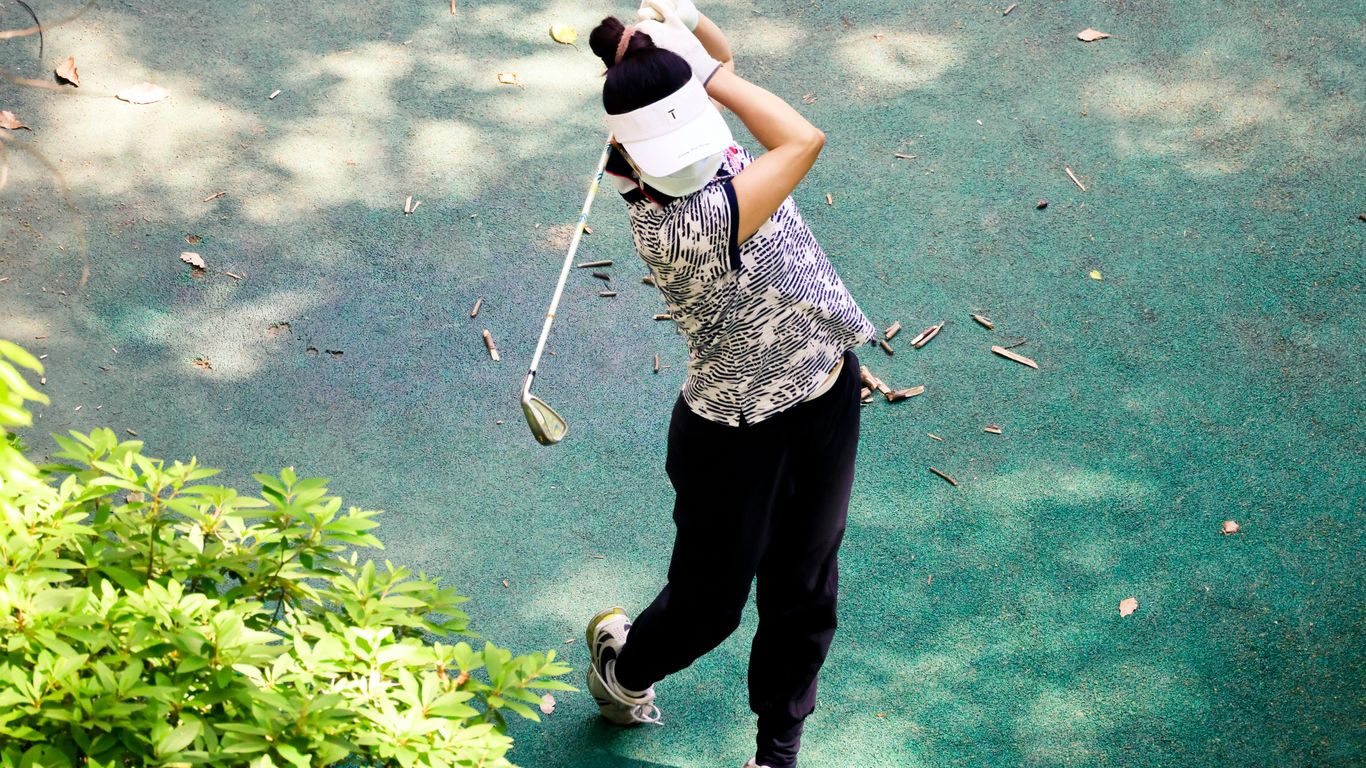
Building a repeatable golf swing doesn't just happen on the driving range. You can actually make huge strides right in your own home. It's all about training your muscles to remember the right movements, so when you get out on the course, your body just knows what to do. This isn't magic; it's science and a whole lot of practice.
Understanding The Importance Of Swing Consistency
Think about your favorite professional golfer. What makes them so good? A big part of it is their consistency. They can hit the same shot, time after time, even under pressure. This consistency comes from a swing that's ingrained in their muscle memory. When your swing is consistent, you reduce the variables that lead to bad shots. You know what to expect, and that confidence alone can lower your scores. It means less frustration and more enjoyment out on the green.
The Science Behind A Reliable Golf Swing
Muscle memory, or motor learning, is how our brains and bodies learn and automate physical skills. When you practice a golf swing repeatedly, your brain creates neural pathways that make the movement more efficient and automatic. The more you repeat a specific motion correctly, the stronger that pathway becomes. This is why drills are so important. They break down the swing into manageable parts and help you build that automatic response. It’s like learning to ride a bike; at first, it’s wobbly, but eventually, you don’t even think about it.
Building Muscle Memory Through Repetition
So, how do you actually build this muscle memory at home? It comes down to focused, deliberate practice. You can't just swing wildly and expect results. You need to perform drills that isolate specific parts of your swing and repeat them with good form. This might involve slow-motion swings to feel the movement, or specific drills designed to improve your impact position. The key is quality over quantity. Doing 50 bad swings won't help, but 50 good, focused swings can make a real difference. Remember, consistency is built one good repetition at a time.
Practicing golf at home is a smart way to refine your skills and build consistency. A structured routine can lead to noticeable improvements on the course, especially when you focus on quality repetitions and specific drills. This approach helps you lower scores and build confidence.
Essential Drills For A Repeatable Golf Swing
Alright, let's talk about drills. You know, the kind that actually help you hit the ball better without you having to think about it too much. Building a swing that you can repeat, shot after shot, is the name of the game. It’s not about hitting it the furthest; it’s about hitting it where you want it to go, consistently. These drills are designed to get your body and club working together like a well-oiled machine.
The Step-By-Step Swing Consistency Drill
This drill is all about feeling the right positions in your swing. It’s not flashy, but it works. You’ll break down the swing into manageable parts, making sure each piece is solid before moving to the next. Focus on smooth transitions rather than raw power.
Here’s how to do it:
- Setup: Get into your normal golf stance. Make sure your weight is balanced, and you’re holding the club with a relaxed grip. Check your alignment – are you aimed where you want to hit it?
- Backswing: Take the club back slowly. Feel your shoulders turn, but keep your lower body pretty stable. The club should feel like it’s on a good path, not too flat or too steep.
- Transition: This is a big one. Don’t rush from the top of your backswing. Take a tiny pause, feel the weight of the club, and then start the downswing with your lower body. Think hips first, then arms.
- Impact and Follow-Through: Try to hit the ball with a square clubface. Keep your head relatively still as you rotate through the shot and finish balanced, with most of your weight on your front foot.
Do this drill slowly at first. Really feel each part. As you get more comfortable, you can gradually increase the speed until it feels more natural. It’s a great way to build that muscle memory we’re after. You can even use a golf swing corrector to help reinforce the proper movements.
A common mistake here is trying to muscle the ball. Remember, consistency comes from good mechanics and tempo, not brute force. If you find yourself tensing up, take a deep breath and reset.
Towel Drill For Arm-Body Connection
This one is super simple but incredibly effective for keeping your arms and body in sync. Tension between your arms and body is a major cause of inconsistency. This drill helps you feel that connection.
- How to do it: Take a small towel and tuck it under the armpit of your lead arm (left arm for right-handed golfers). Make slow, controlled swings, trying to keep the towel tucked throughout the backswing and downswing. If the towel falls out, your arms are likely working independently of your body's rotation.
- What it fixes: Promotes a more unified swing motion, leading to better clubface control and more solid contact.
- Practice tip: Start with half swings and gradually work up to full swings as you feel the connection improve.
Slow-Motion Swing For Mechanical Refinement
Sometimes, you just need to slow things down to see what’s really going on. This drill is like watching your swing in high definition. It helps you feel the correct positions and movements without the pressure of hitting a ball hard.
- The process: Take your full swing, but do it in extreme slow motion. Exaggerate the movements. Feel the rotation of your body, the path of the club, and the weight shift. Focus on the sequence of events.
- Benefits: It helps you identify any jerky movements, tension, or incorrect positions. You can really dial in your swing plane and feel the proper tempo.
- Home practice: This is a perfect drill to do at home, even without hitting balls. You can even use a mirror to check your positions.
By incorporating these drills regularly, you'll start to build that repeatable swing that makes golf so much more enjoyable. It takes time and patience, but the results are definitely worth it.
Refining Your Swing With Specific Drills
Alright, so you've got the basics down, and you're ready to really start fine-tuning that swing. This is where the magic happens, turning a decent swing into something truly repeatable. We're going to look at a few specific drills that target common issues and help build that solid foundation.
The Wall Drill For Swing Plane Accuracy
This one is pretty straightforward but incredibly effective for keeping your club on the right path. You'll need a wall, and just a few inches of space between you and it. Stand facing the wall, a little bit away from it, and make slow, controlled practice swings. The idea is to feel the club moving on the correct plane without hitting the wall. If you're coming over the top, you'll know it pretty quickly because the club will make contact. This drill helps you feel the proper swing plane and prevents those dreaded outside-to-in swings. It’s all about building that awareness of where the clubhead is throughout your motion.
Impact Fix Drill For Square Clubface
This drill is all about what happens at the moment of truth – impact. Grab a towel and tuck it under your lead arm, like you're holding a small flag. Now, take some slow swings. The towel should stay put throughout the swing, especially through impact. If it falls out, it usually means your arms and body aren't working together properly, or you're getting too much separation. Keeping that connection helps ensure you're delivering the clubface squarely to the ball. You can also try pausing at the impact position during your slow swings. Check if your clubface looks square, your weight has shifted forward, and your hands are slightly ahead of the ball. This position is key for solid ball striking.
Gate Drill For Putting Accuracy
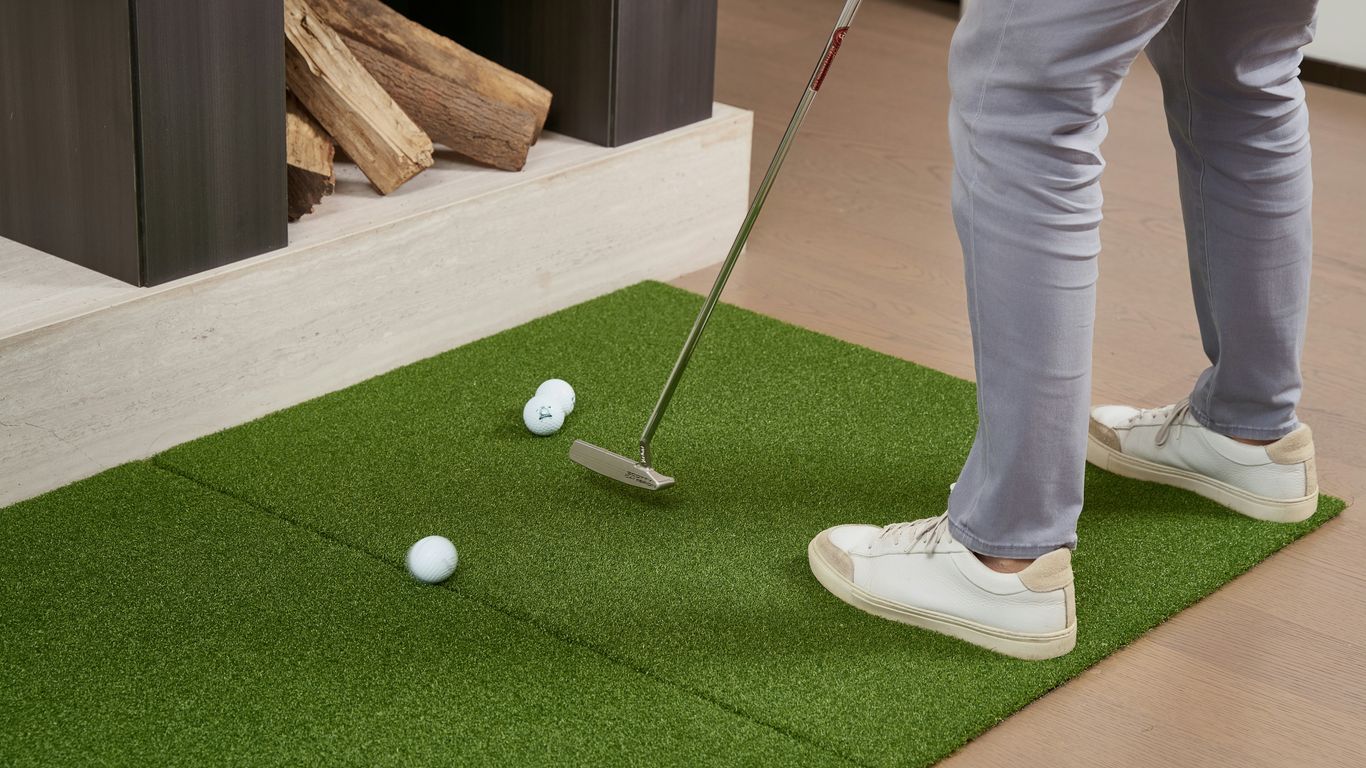
Putting is a huge part of the game, and you can get a ton of practice in right at home. For this drill, you'll need two golf tees. Place them on your putting surface (a mat or even a carpeted floor works) so they're just a little wider than the face of your putter. This creates a 'gate.' Your goal is to putt the ball through this gate without hitting either tee. It sounds simple, but it really forces you to focus on your putter face alignment at impact. If you're consistently missing the gate, it tells you something about your stroke path or face control. It’s a great way to build confidence in hitting putts where you want them to go. You can find some great indoor putting drills online to supplement this.
Practicing these drills consistently, even for just a few minutes each day, will start to build that muscle memory you're after. It's not about hitting the ball hard; it's about repeating the correct movements until they feel natural. Focus on the feel of the motion, not just the outcome.
Optimizing Your Home Practice Environment
Alright, so you've decided to get serious about your golf swing without leaving the house. That's awesome! But before you start swinging away, let's talk about making sure your practice space is actually set up for success. It's not just about having enough room; it's about creating an environment that helps you improve, not just make noise.
Setting Up Your Dedicated Practice Space
First things first, where are you going to do this? You need a spot that's safe and functional. Think about your garage, a spare room, or even a corner of the backyard if you've got the space. The key is to have enough clearance for a full swing without worrying about knocking over lamps or, you know, your spouse's prized vase. A flat surface is also a big plus, especially if you plan on doing any putting drills. If you're in a smaller area, like a basement, you might need to get a bit creative, but even a small setup can be effective for certain drills.
- Clearance: Ensure at least 10-15 feet of space in front of you and 6-8 feet to either side for a full swing.
- Flooring: A stable, flat surface is ideal. If you're on hardwood, a mat is a must.
- Lighting: Good lighting helps you see the ball and your club clearly.
- Ventilation: If you're in an enclosed space, make sure there's some airflow.
Creating a dedicated zone, even a small one, signals to your brain that it's time to focus on golf. It helps separate practice time from everyday life, making your sessions more productive.
Essential Equipment For Effective Training
Now, what do you actually need? You don't have to break the bank, but a few key items make a huge difference. A hitting net is pretty much non-negotiable if you're doing full swings. It saves your walls and your sanity. A good hitting mat is also super important; it gives you a consistent strike and protects your floor or grass. If putting is your focus, a decent putting mat can really help build that stroke consistency. For those serious about data, a launch monitor or simulator can be a game-changer, but start with the basics first. You can find some great options for home golf practice that fit different budgets.
Here’s a quick rundown:
| Equipment | Purpose |
|---|---|
| Golf Hitting Net | Safely catch full swings |
| Hitting Mat | Provides consistent turf interaction |
| Putting Mat | Develops stroke consistency |
| Alignment Sticks | Aids in setting up square to the target |
| Swing Trainer Aid | Provides immediate feedback on swing path |
Choosing The Right Golf Balls For Practice
This might seem minor, but picking the right golf balls for home practice is actually pretty important. If you're in a small space, you don't want to be using your gamer Pro V1s – they're too hard and could cause damage. Soft practice balls or even foam balls are great for limited areas. They give you feedback without the risk. If you have a net setup in your backyard, you can use more realistic balls, but still, consider a dedicated practice set. Having a good number of balls, say 12-24, means you can get into a rhythm without constantly stopping to pick them up. Using balls that mimic your on-course feel is key for a smooth transition. You can find various types of balls designed specifically for practicing golf at home, so you can choose what works best for your setup and budget.
Enhancing Your Golf Fitness And Focus
Getting your body and mind in sync is just as important as perfecting your swing mechanics. A strong, flexible body and a focused mind can make a huge difference in how consistently you play. It's not just about hitting the ball; it's about being able to do it well, shot after shot, even when things get a little tense.
Golf-Specific Workouts For Strength And Mobility
Your golf swing uses a lot of muscles you might not think about every day. Building strength and flexibility specifically for golf can really help. It means you can swing harder, stay balanced, and also help keep yourself from getting hurt. You don't need a fancy gym for this; a lot can be done right at home.
Here's a simple routine you can try:
- Warm-up (5 minutes): Start with some arm circles, torso twists, and maybe a few jumping jacks to get the blood flowing.
- Strength (10 minutes): Try squats for leg power (about 15 reps), hold a plank for 30 seconds, and do medicine ball twists for your core (15 reps on each side).
- Flexibility & Mobility (5 minutes): Finish with stretches like seated hamstring stretches, shoulder stretches, and hip openers.
Doing this regularly can lead to a faster swing, better balance, and more stamina throughout your round.
Visualization And Mindfulness Techniques
Golf is a mental game, plain and simple. How you think about your shots can affect how you hit them. Professional golfers spend a lot of time working on their mental game, and you can too, right from your living room.
- Visualization: Before you even take a practice swing, close your eyes and picture the perfect shot. See the ball flying exactly where you want it to go, landing softly and rolling close. The more you practice seeing it, the more your body will start to remember that feeling and motion.
- Mindfulness: When you're on the course, it's easy to get caught up thinking about that bad shot you just hit or worrying about the next one. Try to stay in the present moment. Focus on your setup, your grip, and the feel of the club. Deep breathing exercises can help calm your nerves before a big putt.
A calm mind and a clear picture of success can often be the difference between a good score and a great one. It's about building confidence from the inside out.
Mental Game Strategies For Consistency
Consistency on the golf course doesn't just come from repeating a swing; it also comes from repeating a positive mental approach. When you're practicing at home, you can work on strategies that help you stay focused and perform better under pressure.
- Develop a Pre-Shot Routine: Having a consistent routine, both physically and mentally, before every shot helps you get into the right mindset. This could involve a few practice swings, a deep breath, and a quick visualization of the shot.
- Manage Expectations: Understand that not every shot will be perfect. Accept that mistakes happen and focus on the next shot. Dwelling on errors only makes it harder to perform well.
- Use Positive Self-Talk: Replace negative thoughts with positive affirmations. Instead of thinking "Don't hit it in the water," try "Focus on a smooth swing and a good result."
By working on these mental aspects, you'll find yourself feeling more confident and playing more consistently, even when the pressure is on.
Leveraging Technology For Golf Improvement
It's pretty amazing how much technology has changed the way we can practice golf at home these days. Gone are the days when you just had to hit balls and hope for the best. Now, you can get all sorts of feedback to really dial in your swing.
Using Swing Trainers For Instant Feedback
Swing trainers are fantastic for getting immediate reactions to what you're doing. Think of something like the SwingMate Pro. These tools are designed to help you feel the correct movements. They often give you a physical cue when you're off track, which is super helpful for building muscle memory. It's like having a coach right there with you, showing you what feels right. They can help with everything from your grip to your arm-body connection, making your practice sessions much more productive.
Integrating Launch Monitors And Apps
If you're a bit of a numbers person, launch monitors and golf apps are your best friends. These gadgets can track all sorts of data about your swing and the ball's flight. You can see your clubhead speed, the angle of your swing, how square your clubface is at impact, and where the ball is going. Many apps even use AI to analyze your swing and suggest specific drills. It's a really data-driven way to improve, giving you a clear picture of what needs work. This kind of detailed analysis used to be only for pros, but now it's accessible for home practice.
Home Golf Simulators For Practice
Home golf simulators are the ultimate practice setup if you have the space and budget. They combine visual feedback with performance tracking. You can hit balls into a screen and see a realistic representation of your shot, along with all the data from a launch monitor. It's not just about hitting balls; you can play virtual rounds, practice on famous courses, and work on specific parts of your game. It makes practice feel more like playing, which can be a huge motivator. Plus, it's a great way to keep your game sharp when you can't get out to the course. For those looking to improve their short game, there are also specific guides available on how to become a short game magician.
Technology can seem a bit overwhelming at first, but breaking it down into specific tools like swing trainers, launch monitors, and simulators makes it much more manageable. The key is to use these tools to get clear, actionable feedback that helps you build a better, more repeatable golf swing.
There are so many golf training aids out there now, it's easy to find something that fits your needs and budget. The important thing is to use them consistently to build that muscle memory we've been talking about.
Tracking Progress And Maintaining Momentum
So, you've been putting in the work at home, drilling those swings, and feeling a difference. That's awesome! But how do you know if it's actually sticking? And more importantly, how do you keep that motivation going, especially when life gets busy or the weather's just plain awful?
Keeping An Effective Golf Practice Journal
This is where a good old-fashioned practice journal comes in handy. It’s not just about scribbling down what you did; it’s about creating a roadmap for your improvement. Think of it as your personal golf diary. Logging your sessions helps you see what’s working and what’s not, preventing you from repeating bad habits.
Here’s what you should jot down:
- Date and Time: Simple, but it helps track frequency.
- Drills Practiced: Be specific. Did you do the Towel Drill? For how long?
- Focus Areas: What were you trying to improve? (e.g., keeping your head still, smooth transition).
- Feelings/Observations: How did it feel? Did you notice any changes in your swing? Were you hitting the ball better?
- Key Takeaways: What’s the one thing you learned or need to remember for next time?
It might seem like a bit of extra effort, but looking back at your journal can be incredibly motivating. You’ll see how far you’ve come, even on days when you feel like you’re not improving.
Setting Realistic Goals For Improvement
Goals are great, but unrealistic ones can be a real buzzkill. Instead of saying "I want to hit it 300 yards next week," try something more manageable. Break down your big aspirations into smaller, achievable steps. For example, if your goal is a more consistent swing, a smaller goal might be to execute the Step-By-Step Swing Consistency Drill perfectly five times in a row without any tension.
Here’s a way to think about setting goals:
- Short-Term Goals: Focus on improving one specific aspect of your swing or practice routine for the next week or two. (e.g., "Maintain light grip pressure throughout the swing.")
- Mid-Term Goals: Aim for noticeable improvements over the next month or two. (e.g., "Reduce slices by 50% during practice sessions.")
- Long-Term Goals: These are your bigger picture aspirations for the season or year. (e.g., "Achieve a single-digit handicap.")
Remember, consistency in practice is key. Even 15 minutes a day can make a huge difference over time. You can find some great tips on consistent practice in "100 Golf Playing Tips" 100 Golf Playing Tips.
Practicing During Off-Seasons And Bad Weather
Don't let a little rain or a closed course stop your progress. The off-season is actually a prime time to build that muscle memory without the pressure of playing. You can focus purely on technique.
Think about these indoor options:
- Mirror Work: Practice your setup and slow-motion swings in front of a mirror. It’s a simple way to check your posture and alignment.
- Putting Drills: Even a small putting mat can help you work on your stroke and feel.
- Short Game Practice: If you have a net, you can practice chipping and pitching.
The key is to keep the movements fresh in your mind and body. Even if you can't hit balls, you can still work on the mechanics and feel of your swing. It's about staying engaged and not letting your hard-earned progress slip away.
By tracking your progress, setting sensible goals, and finding ways to practice even when you can't get outside, you'll be well on your way to building that repeatable swing you're aiming for.
Keep an eye on how far you've come and make sure you're still moving forward. It's easy to get stuck, but staying on track is key to reaching your goals. Ready to see how much better you can get? Visit our website to learn more about how we can help you improve.
Keep Swinging, Keep Improving
So, building that repeatable golf swing at home isn't some impossible dream. It really just comes down to putting in the work, focusing on the right things, and not getting too down on yourself when you mess up. Remember those drills we talked about? They're your ticket to making good habits stick. It’s not about hitting a thousand balls perfectly; it’s about hitting them with a swing that feels good and that you can do again and again, even when you’re a little nervous on the course. Keep at it, stay patient, and you’ll definitely see your game get better, one practice swing at a time.
Frequently Asked Questions
What is muscle memory in golf, and why is it important for my swing?
Muscle memory is like teaching your body to do a golf swing without you having to think hard about every little move. When you practice a certain way over and over, your muscles learn to repeat that motion. This is super important because it helps you make the same good swing again and again, even when you're a bit nervous or not thinking too much. It’s what makes your swing feel natural and reliable.
How can I build a repeatable golf swing at home without a driving range?
You can definitely build a better swing at home! Focus on slow-motion swings to feel each part of your movement. Drills like the towel drill (tucking a towel under your armpit) help connect your arms and body. Practicing putting on a mat and doing basic golf fitness exercises also make a big difference. It's all about focused repetition.
What are some simple drills I can do at home to improve my swing consistency?
Try the 'Step-by-Step Swing Consistency Drill' where you focus on each part of the swing slowly: setup, backswing, transition, and follow-through. The 'Towel Drill' keeps your arms and body working together. For putting, the 'Gate Drill' helps you hit your putts straight by aiming through a narrow gap.
How often should I practice my golf swing at home to see results?
Consistency is key, so shorter, more frequent practice sessions are better than one long session. Aim for about 10-15 minutes of focused practice almost every day. This helps build that muscle memory much faster than practicing for hours just once a week.
What are the common mistakes people make when practicing golf swings at home?
A big mistake is practicing too fast or trying to hit the ball hard. This just repeats bad habits. Another common error is being too tense in your grip or shoulders, which stops your swing from being smooth. Also, make sure you're set up correctly each time; poor setup leads to a bad swing.
Can technology like swing trainers or apps really help improve my golf swing at home?
Yes, technology can be a great help! Swing trainers give you instant feedback on your movement, showing you if you're swinging correctly. Apps and launch monitors can track your swing speed, path, and other important details. This information helps you understand what you need to fix and speeds up your learning process.


