

Getting into golf is exciting, but figuring out how to actually improve your swing without being on the course can feel a bit tricky. You might think you need a fancy setup or hours of practice, but honestly, a few smart tools can make a big difference. This guide is all about finding the best golf swing trainer for beginners, focusing on gear that makes practicing at home simple and effective. We'll look at some handy gadgets that help you build good habits without needing a pro watching your every move.
Key Takeaways
- Feedback is key; without it, you might be practicing the wrong things.
- Set up a small, easy-to-access practice spot at home.
- Keep practice sessions short, around 30 minutes, a few times a week.
- Focus on drills that help you on the actual golf course.
- Using the right training aids can speed up your progress and make practice better.
1. SKLZ Tempo & Grip Trainer
Alright, let's talk about the SKLZ Tempo & Grip Trainer. This thing is pretty straightforward, and honestly, that's kind of its strength, especially when you're just starting out. It's not some fancy gadget that tries to do a million things; it focuses on two really important parts of your golf swing: how you hold the club and the rhythm of your swing.
One of the biggest hurdles for new golfers is just getting a solid grip. You know, not too tight, not too loose, and with your hands in the right spot. This trainer has these molded sections that guide your hands into the correct position every single time. It sounds simple, but building that muscle memory for a good grip is huge. If your grip is off, everything else tends to fall apart, leading to those frustrating slices or hooks.
Then there's tempo. Golf swings aren't supposed to be rushed. This trainer has a bit of weight to it, which helps you feel the proper flow of the swing. It encourages you to take the club back smoothly and transition into the downswing without that jerky, hurried feeling. Getting your tempo right makes a massive difference in consistency and control.
Here’s why it’s a good pick:
- Corrects your grip: The built-in guides make sure your hands are placed properly.
- Improves tempo: The weight helps you feel a smooth, unhurried swing.
- Builds muscle memory: Consistent practice ingrains good habits.
- Portable: You can take it to the range or even swing it at home.
This trainer is a solid choice because it tackles two of the most common beginner issues head-on. It's not about adding distance or fixing a specific flaw; it's about building a strong foundation with your grip and swing rhythm. That foundation is what everything else is built upon in golf.
It’s also super easy to use. You can just grab it and take a few practice swings before you even get to the driving range, or use it indoors when you have a few minutes. It’s not meant for hitting balls, but for grooving that feel of a good grip and a smooth tempo. For the price, it’s a really practical tool that can help you avoid developing bad habits early on.
2. Rypstick Speed Trainer
If you're looking to add some serious distance to your drives, the Rypstick Speed Trainer is definitely worth checking out. It's not your typical swing trainer, but it's incredibly effective for boosting clubhead speed, which directly translates to hitting the ball farther. This tool is designed to help you swing faster without messing up your swing mechanics or efficiency.
The Rypstick has a pretty neat design that lets you adjust the weight. This means you can start with a lighter setting and gradually increase it as you get stronger and faster. It's a smart way to build up your speed without risking injury. They even have different models for juniors, men, women, and seniors, so there's likely one that fits you.
Here's what makes it stand out:
- Progressive Weight System: Start light and increase the weight as your speed improves.
- Focus on Speed and Efficiency: Helps you swing faster while maintaining good form.
- Injury Prevention: The gradual increase in weight helps avoid strain.
- Versatile Models: Available for golfers of all ages and genders.
Many users report seeing real improvements in their swing speed and consistency after just a few weeks of using the Rypstick. It's a solid investment if you're serious about adding effortless power to your game and seeing better results on the course. You can find out more about how it can help improve your golf swing speed.
The Rypstick is a standout tool for anyone wanting to hit the ball further. It focuses on building speed in a way that actually helps your overall swing, making it a smart choice for golfers who want measurable results.
3. PlaneMate
The PlaneMate is a pretty neat training aid that helps you get your golf swing on the right path. It uses resistance bands to give you feedback throughout your swing, from the start of the takeaway all the way through to the downswing. This helps you feel what it's like to rotate your body correctly and keep the club connected to your swing.
It's designed to help fix common issues like swinging too far inside or coming over the top. By working with the resistance, you're encouraged to make a more athletic and repeatable motion. It's not just for full swings either; you can use it to work on your chipping and pitching too, which is a nice bonus.
Here’s what the PlaneMate can help with:
- Developing a more on-plane swing.
- Improving body rotation and connection.
- Reducing common swing faults like coming over the top.
- Enhancing short game mechanics.
This trainer gives you a feel for the correct positions throughout the entire swing. It's a good way to build muscle memory for a more consistent motion, whether you're just starting out or trying to fine-tune your game.
4. HackMotion
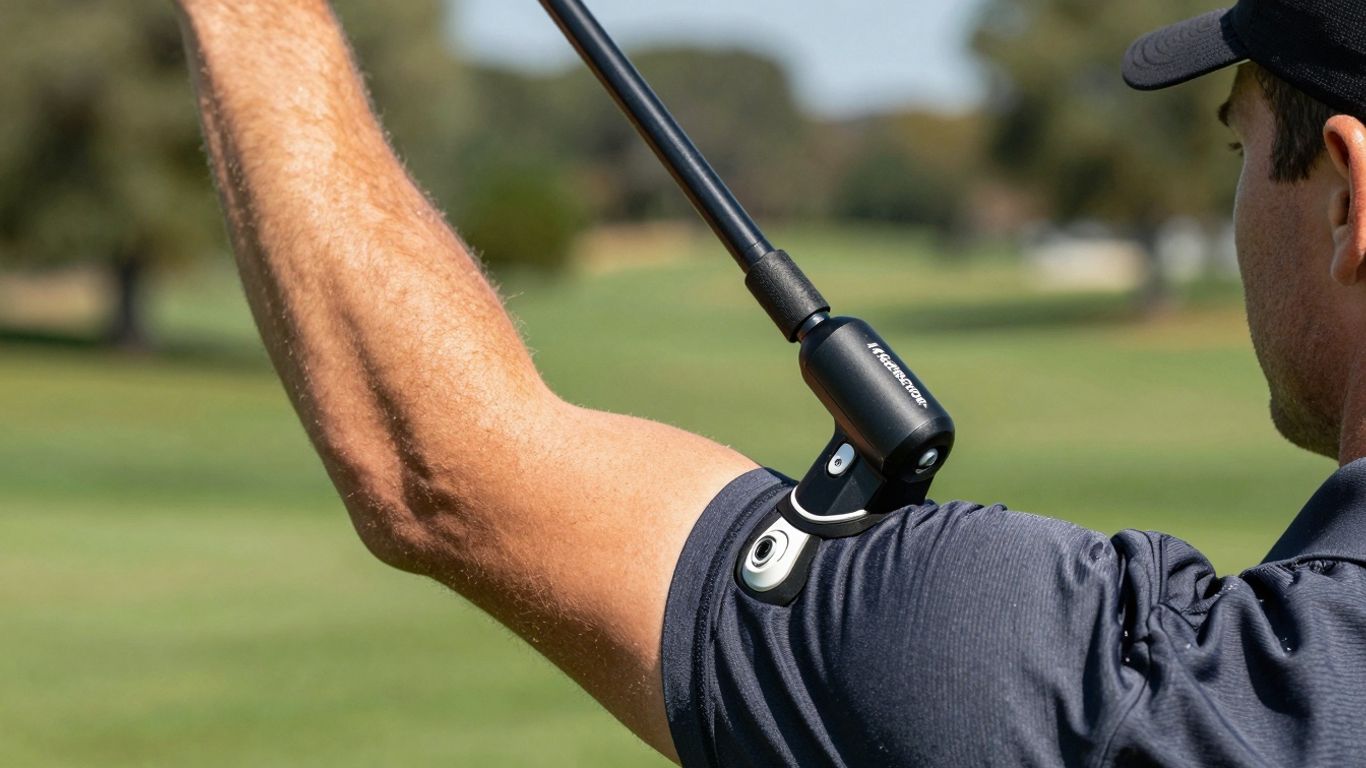
The HackMotion is a pretty neat piece of tech that attaches to your wrist and gives you real-time feedback on your swing. It's not exactly a beginner's tool, more for those who are really trying to dial in their game and understand the mechanics. It connects to an app, which is where the magic happens. You can see graphs of your wrist angles, tempo, and even how your putter is moving. It's all about getting objective data so you're not just guessing what you're doing wrong.
This thing is great for working on specific parts of your swing without even needing to hit a ball. For example, there's a drill to help you get the right wrist position at the top of your backswing. You just swing slowly, and the HackMotion tells you if you're doing it right. Another popular one is the "Motorcycle Drill," which helps you get that proper wrist flexion through impact to hit the ball cleaner. It's also surprisingly useful for putting practice, helping you keep the putter face square and improve your tempo. If you're serious about improving your golf performance, it's worth looking into HackMotion.
Here are a few drills you can do with it:
- Stable Wrist Takeaway: This helps you start your backswing correctly, keeping the clubface from opening up too early.
- Top Drill: Focuses on getting your wrist position just right at the peak of your backswing, which is key for controlling the clubface through the ball.
- Motorcycle Drill: Teaches you to flex your lead wrist properly as you swing through impact, helping you hit the ball with more compression.
- Rotation Control Drill (Putting): Helps keep your putter face square during your stroke, leading to straighter putts.
You can set up a dedicated practice space at home, even if it's just a corner of a room. Keeping your HackMotion sensor charged and ready to go near your mat means you're more likely to use it consistently. Small steps like this make a big difference over time.
5. ButterBlade Swing Trainer
Alright, let's talk about the ButterBlade Swing Trainer. This one is definitely not for the faint of heart, or for beginners just starting out. Think of it as a precision instrument for your golf swing. The clubface on the ButterBlade is incredibly small – seriously, like, almost non-existent. What does this mean for you? It means you absolutely have to hit the ball square on the sweet spot. There's no room for error here.
If you're someone who struggles with inconsistent contact, or maybe you're just looking to take your iron play to an elite level, this could be your new best friend. It forces you to focus on a clean strike every single time. You'll know immediately if you've missed the sweet spot, and that instant feedback is what helps you dial in that perfect contact. It's a fantastic way to build serious precision.
Here's what you can expect:
- Zero Margin for Error: The tiny clubface demands perfect contact.
- Instant Feedback: You'll feel and see every mis-hit.
- Precision Improvement: Great for sharpening iron play and ball-striking.
- Tempo and Balance: Forces you to maintain control throughout the swing.
This trainer is all about developing that razor-sharp focus on center-face contact. If you can consistently hit the ButterBlade well, swinging a regular iron will feel like a walk in the park. It's a challenging tool, but the payoff in terms of ball-striking consistency can be huge for the right golfer.
So, if you're an intermediate to advanced player who's ready for a serious challenge and wants to achieve pinpoint accuracy with your irons, the ButterBlade is worth checking out. It's a tough teacher, but it gets results.
6. Momentus Swing Trainer
The Momentus Swing Trainer has been around for a while, and for good reason. It’s a solid piece of equipment that many golfers, from beginners to pros, have used to get better. It’s basically a weighted golf club that feels a bit heavier than your normal driver or iron.
The main idea behind it is to help you build a smoother, more controlled swing by forcing your muscles to work a bit harder. When you swing it, you really feel the weight, which helps slow down your takeaway and makes you think about your transition from the backswing to the downswing. This can really help prevent that jerky, rushed feeling many beginners get. It’s also great for warming up before a round; a few swings with the Momentus and your golf muscles feel ready to go.
Here’s what you can expect:
- Improved Tempo: The extra weight naturally slows down your swing, helping you find a better rhythm.
- Better Sequencing: It encourages you to move your body in the right order, leading to a more powerful and consistent strike.
- Muscle Memory: Regular practice builds the right muscle memory, so your normal swing starts to feel more natural and controlled.
- Warm-up Tool: It’s a fantastic way to get your body ready for a round, activating the muscles used in the golf swing.
Using a weighted trainer like the Momentus helps you feel the proper motion of the golf swing. It’s not about swinging harder, but swinging better, with more control and a good sequence of movements. This translates directly to more consistent shots on the course.
If you're looking for a straightforward way to work on your swing fundamentals without any fancy tech, the Momentus Swing Trainer is definitely worth checking out. It’s a classic for a reason and a good addition to your practice routine, especially if you want to improve your overall golf swing mechanics.
7. Golf Mat
Alright, let's talk about golf mats. If you're setting up a practice space at home, especially if you don't have a backyard where you can just hit balls into a field, a good hitting mat is pretty much a must-have. It gives you a consistent surface to strike from, protecting your clubs and your floor (if you're indoors). Think of it as your personal tee box, no matter where you are.
There are a bunch of options out there, ranging from basic to pretty fancy. Some mats are designed to mimic different types of lies you'd find on the course – like the fairway, the rough, or even a tight lie. This adds a bit more realism to your practice. For example, a mat like the HotShot golf hitting mat is a solid choice because it offers different surfaces and a non-slip base, which is super important so it doesn't slide around when you're swinging.
When you're picking one out, consider a few things:
- Durability: You'll be hitting a lot of shots, so you want something that can take a beating without falling apart.
- Surface Feel: Does it feel reasonably like hitting off grass, or is it too hard and unforgiving?
- Size: Make sure it's big enough for your stance and swing, but also fits the space you have available.
- Portability: If you might need to move it around, a foldable or lighter mat could be a good idea.
You don't necessarily need the most expensive mat to get good practice in. For most beginners, a mat that provides a stable hitting surface and a decent feel is perfectly adequate. The key is consistency in your practice, and a mat helps provide that.
Some mats even come with built-in features, like alignment aids or different hitting surfaces. While you can spend a good chunk of change on a high-end mat, there are plenty of solid, more affordable options that will serve you well as you work on your game. It's all about finding that balance between what you need and what your budget allows.
8. Hitting Net
Alright, let's talk about hitting nets. If you're practicing at home, especially if you don't have a huge backyard or you're worried about your neighbors, a hitting net is pretty much a must-have. It's the simplest way to get a lot of swings in without chasing balls all over the place or worrying about breaking a window.
There's a pretty wide range of these things out there. You can find some basic ones that are super affordable, maybe around $80 to $100. These are usually fine for shorter irons and maybe some mid-irons. However, if you're planning on hitting drivers or wedges, you might want to look at something a bit bigger and sturdier. The last thing you want is a ball zipping through the net because it wasn't tall or wide enough, or because it's not built to handle the impact of faster swings.
Some of the higher-end nets can go for $300 or even $400. These are typically much more robust, easier to set up, and often come with better side and roof protection. Think of it like this: if you're spending a good chunk of change on clubs, investing in a solid net that will last and let you practice effectively makes a lot of sense. It's all about getting the most out of your practice time.
Here are a few things to consider when picking one out:
- Size: Make sure it's big enough for the clubs you plan to hit. Drivers need more space than wedges.
- Stability: Does it feel sturdy when you set it up? You don't want it wobbling around with every swing.
- Ease of Setup: Some nets practically spring into place, while others can be a bit of a puzzle. If you're going to be setting it up and taking it down often, this matters.
- Durability: How well is it made? Will it hold up to hundreds or thousands of golf ball impacts?
A good hitting net is your best friend for consistent at-home practice. It lets you focus purely on your swing mechanics without the distraction of ball retrieval or worrying about where the ball is going. It's a simple tool, but incredibly effective for building repetition and muscle memory, which is what golf is all about.
Don't forget that even the pros use nets. Rory McIlroy, for example, spent two weeks practicing in a studio with a net. So, if it's good enough for a top player, it's definitely good enough for us beginners trying to get our swings dialed in.
9. Golf Mirror
A golf mirror is a pretty neat tool for anyone trying to get their swing dialed in at home. It's basically a large mirror, often with grid lines, that you set up in front of you while you practice. The main idea is to give you instant visual feedback on your setup and swing.
Seeing your swing in real-time can really help you spot those little things that are off, like your posture or how your club is moving. It's easy to think you're doing something right, but the mirror shows you the truth. For beginners, this is super helpful because you're still building the muscle memory for a good swing, and seeing it helps a lot.
Here's what you can check with a golf mirror:
- Setup: Are your feet the right distance apart? Is your spine angle correct? Is your ball position consistent?
- Takeaway: Is your club moving straight back? Are your wrists hinging properly?
- Downswing: Are you coming from the inside? Is your body rotating correctly?
- Follow-through: Is your weight transferring? Are you finishing in a balanced position?
It's not about making perfect swings right away, but about using the mirror to make small adjustments. You can use it with or without hitting balls, just focusing on the motion. Some people even use it with alignment sticks to really nail down their setup.
Practicing with a golf mirror is like having a coach watching your every move, but without the pressure. It helps you connect what you feel with what you're actually doing, which is a big step in improving your golf game from home.
10. Foam Balls
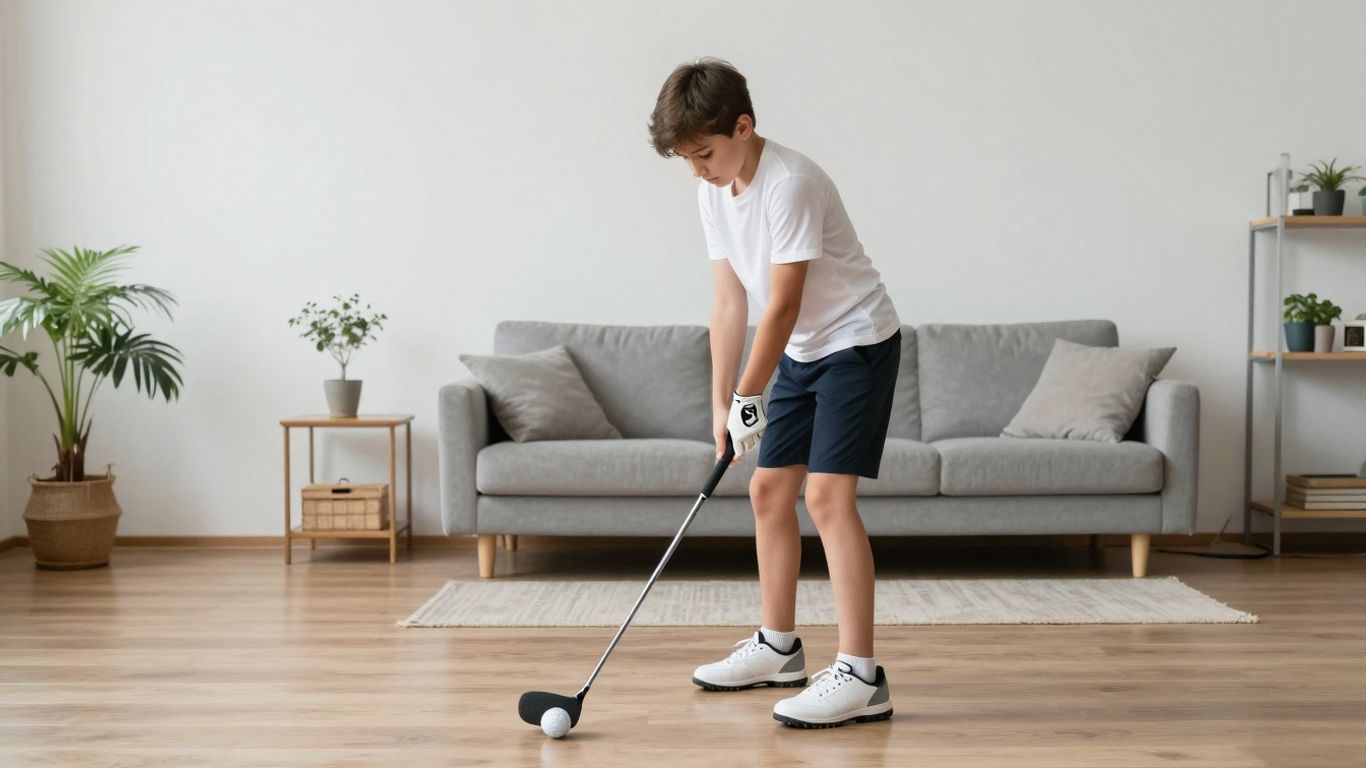
Foam golf balls are a game-changer for practicing your swing indoors or in tight spaces. You know, those times when you really want to get some swings in but can't make it to the driving range? These lightweight balls are perfect for that. They're designed to be safe for indoor use, meaning you won't have to worry about breaking windows or damaging furniture. Plus, they give you a decent sense of impact and ball flight, even though they don't travel far.
They're especially useful for practicing short game shots like chipping and pitching without needing a lot of room. You can work on your tempo, your grip, and getting a feel for striking the ball cleanly. It's not quite the same as hitting a real golf ball, obviously, but it's way better than not practicing at all.
Here's why they're great for at-home practice:
- Safety First: They're soft and light, so you can swing with confidence indoors.
- Feel for Impact: While they don't fly far, you still get feedback on your strike.
- Short Game Focus: Ideal for practicing chipping, pitching, and even some full swings in a confined area.
- Versatile Drills: You can use them for various drills, like the plane chipping drill where you set up a gate for the club to pass through.
When you're just starting out, the goal is to build a consistent motion. Foam balls let you do that without the pressure of hitting a real ball or the risk of damaging your surroundings. It's all about repetition and getting comfortable with the swing itself. You can even use them to practice your putting stroke, focusing on a smooth takeaway and follow-through.
Think of them as a stepping stone. You can practice your swing mechanics, get a feel for the clubhead, and work on your tempo. It's a simple tool, but it really helps keep your game sharp between actual rounds or trips to the course. They're inexpensive too, so you can stock up and have plenty to practice with.
Wrapping It Up
So, practicing golf at home is totally doable, even if you're just starting out. You don't need a fancy setup or a ton of space. The main thing is to have some kind of tool, like the trainers we talked about, that gives you feedback. Without it, you might just be practicing the wrong things, and that's no fun. Stick to short, focused sessions, use your trainer to see what's actually happening, and you'll start to see a difference. It's all about making every swing count, and before you know it, you'll be feeling more confident on the course.
Frequently Asked Questions
What's the best way for a beginner to practice golf at home?
For beginners, practicing at home means focusing on the basics. Use tools like a tempo trainer to get your swing rhythm right and a grip trainer to make sure your hands are on the club correctly. Even just swinging in front of a mirror helps you see your movements and make sure you're doing them right. The key is to practice slowly and correctly, not just quickly.
Do I need a lot of space to practice golf at home?
You don't need a huge space. A small area, like a corner of a room or a garage, is often enough. You can use foam balls and a hitting net if you have a bit more room, or just practice the motion of your swing with a trainer. The most important thing is having a spot where you can practice regularly without feeling cramped.
How often should I practice golf at home?
Consistency is more important than long sessions. Aim for shorter, focused practice sessions, maybe 3 to 5 times a week for about 30 minutes each. This helps build good habits without getting tired or bored. It's better to do a little bit often than a lot all at once.
What are common mistakes beginners make when practicing golf at home?
A big mistake is practicing without knowing if you're doing it right. Without feedback, you might be repeating the same wrong move over and over. Another error is only practicing the full swing and forgetting about chipping and putting, which are also super important. Always try to get some kind of feedback, whether from a tool or just watching yourself.
Are golf swing trainers really helpful for beginners?
Yes, absolutely! Swing trainers are designed to help you feel and correct your movements. Some help with your swing's speed and rhythm, others guide your hands to the right grip, and some even give you data on your swing. They act like a coach, giving you instant feedback so you can learn to swing the correct way.
Besides swing trainers, what other gear is good for home practice?
A golf mat is great for protecting your floor and giving you a consistent place to hit from. A hitting net is useful if you want to hit balls without worrying about where they go. A golf mirror helps you see your posture and swing path. Foam balls are safe to use indoors. These items help make your practice space more effective.


